Home >
Explore GES >
News >
From research to reality: Leading Multilingual Practice in an International School
News
From research to reality: Leading Multilingual Practice in an International School
Our Deputy Head of Primary and Head of MFL, Réjane Durey, shares her thoughts on harnessing multilingualism in school.
In international schools, multilingualism is not a challenge to manage, it is a strength to harness. At Geneva English School, one of my responsibilities is to lead the multilingual dimension of the school, ensuring that research-informed practice supports every learner academically, socially, and emotionally.
Why multilingualism matters
Multilingualism is not only a linguistic reality in international schools; it is a powerful driver of thinking, learning, identity, and inclusion.
Research shows that multilingualism strengthens cognitive flexibility, problem-solving, and metacognitive skills. As Jim Cummins explains through his Common Underlying Proficiency model, conceptual understanding developed in one language transfers to others. Children do not relearn concepts; they connect existing understanding to new language.
Multilingualism also supports strong academic outcomes. When pupils can draw on their home language, they access prior knowledge more effectively and transfer key skills such as reasoning, summarising, and organising ideas into the school language.
Furthermore, language is deeply linked to identity and self-esteem. Valuing all languages affirms pupils’ cultural identities, increases confidence, and encourages greater engagement in learning. Organisations such as UNESCO and the OECD highlight multilingualism as central to inclusive education, ensuring fair access to learning for all pupils.
Finally, recognising and celebrating languages fosters a strong sense of belonging, building confidence and meaningful connections within the classroom and across the school community.
From theory to classroom practice
My work at GES has been shaped by professional learning with Eowyn Crisfield and by ongoing reading of research by other experts in multilingual education, and has led me to develop a whole-school approach that embeds multilingual-inclusive strategies in everyday practice.
Across GES, we embed multilingual-supportive practices in everyday teaching, including: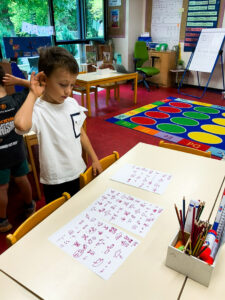
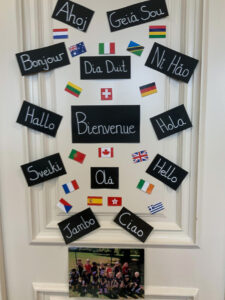
- Daily routines that include greetings, registers, and classroom displays reflecting the languages spoken by pupils
- Use of Talk for Writing in Reception and Key Stage 1, which prioritises oracy, repetition, actions, model texts and visual scaffolds to build confidence, pronunciation, and accurate sentence structures. The imitation–innovation–invention stages guide learners from supported practice to independent communication, reducing anxiety and strengthening grammatical accuracy
- Pre-teaching vocabulary with visuals and gestures before reading or storytelling.
- Use of adaptive teaching strategies when needed: Pause, rephrase instruction, chunk the information, recap slowly.
- Using home languages as thinking tools, allowing pupils to brainstorm or rehearse ideas in their language before producing work in English.
- Use of scaffolding techniques: Visual word mats, sentence starters, and modelling across subjects.
These approaches benefit all learners but they are particularly powerful for multilingual pupils.
Translanguaging in action
An important area of development in our practice is the intentional use of translanguaging. This approach is increasingly encouraged across classrooms as part of our commitment to inclusive, research-informed pedagogy. Rather than restricting language use, pupils are supported in drawing on their full linguistic repertoire at strategic moments in the learning process.
One example being developed across classrooms is Think–Pair–Share. During the thinking and pairing stages, pupils are encouraged, where appropriate, to discuss ideas in their home language when paired with a peer who shares that language. This enables them to clarify thinking, access richer vocabulary, and rehearse more complex ideas before sharing in English.
We also encourage the purposeful use of digital devices to support learning. Pupils can use technology to research a topic in their home language, gather key information or concepts, and then transfer this understanding into English for their final written or oral outcome. This careful use of digital tools supports deeper comprehension, builds confidence, and often results in more accurate and secure English output.
Another example of translanguaging in action is our “Word of the Week” approach. Teachers select the word of the week and provide translations in the home languages spoken within the classroom. Pupils are then invited to reflect on these translations and discuss with the teacher whether the words used are accurate and appropriate. This dialogue empowers children to think critically about their own language, develop metalinguistic awareness, and take ownership of their linguistic knowledge. In some cases, pupils also discover or deepen their understanding of the word in their home language, enriching their vocabulary across languages.
Crucially, the focus remains on cognitive challenge and the quality of thinking, rather than on the language of first response. Used thoughtfully, translanguaging does not slow English acquisition; it actively supports it.
 Creating belonging through language and culture
Multilingual practice is deeply linked to identity, belonging, and community. At Geneva English School, we intentionally strengthen links with families by valuing home languages as a central part of learning and school life.
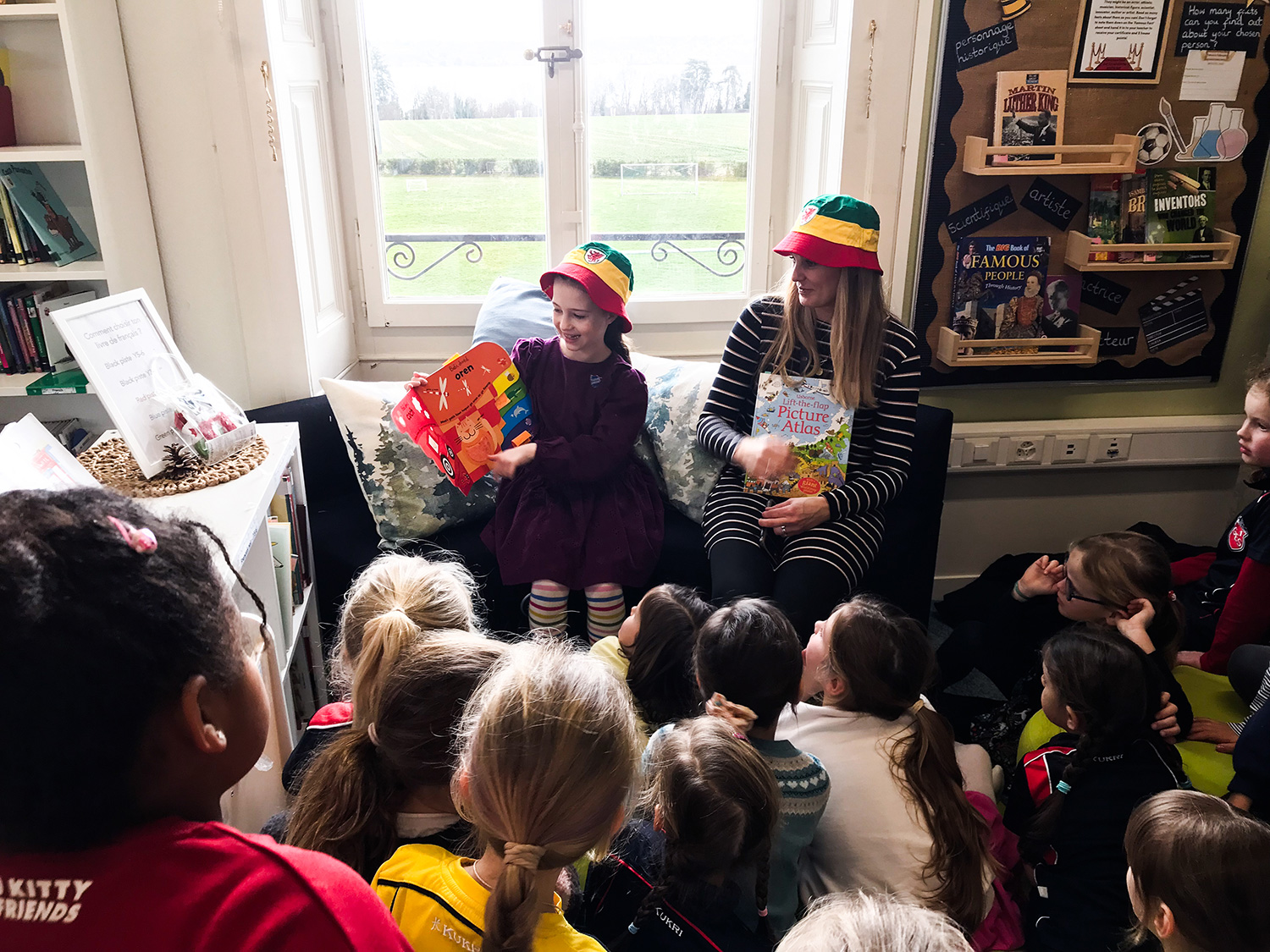
Families play an active role in this work. Parents are invited into school to read stories in their home language and to share cultural traditions during key events such as European Language Day, Mother Language Day, and wider cultural celebrations. These moments help children see their language and culture reflected and respected within the school environment.
Strong links with families are also reinforced through communication. Each half term, parents receive an overview of the curriculum, including the books and topics studied in class. This enables families to access related content in their home language, discuss learning at home, and support deeper understanding and continuity between school and home.
Alongside this, our Language Ambassadors play an important role in raising awareness of linguistic diversity across the school. These pupils volunteer to promote languages, support language-focused initiatives, and help lead activities such as reading stories in different languages in the library, fostering curiosity and respect among their peers.
Our commitment to multilingualism is also visible in the physical environment of the school. The library includes a dedicated multilingual section, giving pupils access to books in their home language as well as in English. Bilingual and multilingual work is displayed across the school, reinforcing pride, visibility, and inclusion.
When children see their language recognised, shared, and celebrated by teachers, peers, and families, confidence grows, engagement deepens, and a strong sense of belonging is created.
Concluding reflections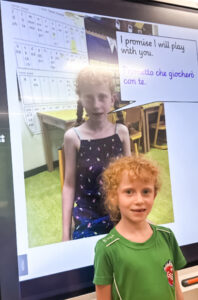
Supporting multilingual learners is not about lowering expectations or simplifying learning. It is about recognising children’s languages as powerful foundations for thinking, learning, and success. When schools intentionally embed multilingual practice, encourage translanguaging, and work in partnership with families, pupils develop greater confidence, a stronger sense of belonging, and more secure academic outcomes.
As leaders, our responsibility is to ensure that research meaningfully informs practice, and that practice reflects our values of inclusion, equity, and high expectations. Multilingualism is not something to manage or contain; it is something to value, harness, and encourage.